Close

 Close


Last modified: 23 November 2026 (added grant eligibility tool)
Electricity prices keep climbing.
Solar panels help. A lot.
But there’s a catch. Your panels do their best work around midday, when many of us are out. Any surplus goes back to the grid for a fraction of what you pay for electricity in the evening.
A home battery fixes that. It stores your spare solar electricity so you can use it when you actually need it.
Plus, you can charge a battery at night when electricity is cheaper (if on a day/night tariff) and use that to power your home during the day when prices are higher.
But batteries aren’t cheap.
However, on 6 October 2026, the SEAI launched a €600 battery grant.
So who can get it? How does it work? And how much of the installation costs does it actually cover?
Let’s take a look.
Key takeaways:
Eligibility criteria apply – skip to our Battery Grant Eligibility Checker to easily and quickly see if you can avail of the battery grant.
But next, let’s take a look at the battery grant in more detail.
Related: Grants For Solar Panels [Calculator Included].
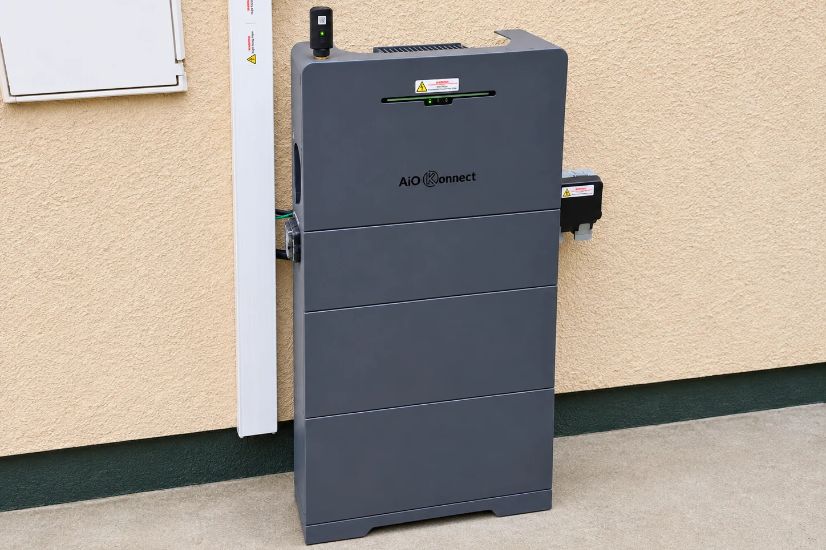
The battery grant, also referred to as The Battery Energy Storage System Grant, is the SEAI’s €600 flat rate grant to incentivise the installation of batteries in Irish homes.
It’s a “flat rate” grant so the amount doesn’t change with the size of the battery. The €600 grant is available for a 5kWh battery or larger. Batteries smaller than 5kWh don’t qualify.
The battery grant (capped at €600) is standalone but can also be paired with solar panel grants (capped at €1,800), bringing the maximum available grant value for solar to €2,400.
You can still avail of the battery grant if you’ve already installed solar panels.
Applications for the battery grant are made via the SEAI Application Portal.
Some registered SEAI installers manage the entire grant process and take the grant value off upfront. This minimises paperwork for you and makes renewable energy solutions more accessible to all.
The €600 battery grant covers 11% to 17% of installation costs.
According to the SEAI, a fully installed battery typically costs €3,500 to €5,500.
The size of the battery, quality of the unit, labour costs, battery location, length of cable run, and many more factors impact battery installation costs.
But homeowners can expect the battery grant to cover 11%-17% of a typical installation.
The battery grant brings the actual out-of-pocket cost down to €2,900-€4,900 for a typical battery installation.
The table below summarises how much the battery grant covers typical battery installation costs.
| Total battery installation cost | Battery Grant | % Covered By Grant | Remaining Cost |
| €3,500 | €600 | 17.1% | €2,900 |
| €5,500 | €600 | 10.9% | €4,900 |
The €600 grant is refunded by the SEAI after all works have been completed.
So, you’ll be charged the total installation costs upfront, unless you choose an installer like Ohk energy – we take grant values off upfront costs.
The grant is open to properties owned by:
Your home also needs to:
Other criteria that must be met include:
For convenience, we’ve made a tool to help you easily check your eligibility for the battery grant…
Use this Battery Grant Eligibility Checker to easily see if you’re eligible for the SEAI Battery Energy Storage System Grant – just answer a few simple questions.
Answer four quick questions to see if you're eligible for the €600 SEAI battery grant.
First find a SEAI registered installer and then start your battery grant application via the SEAI Application Portal.
Unlike Ohk energy, most installers don’t take grant costs off upfront so, after completing the questions in the SEAI portal, it’s important to wait for your “Letter of Offer” from the SEAI.
Your installer applies to ESB Networks to get approval to connect the battery to the grid.
After getting approval, your installer can then complete the installation, declare everything meets the battery grant requirements, then fill out and sign the Declaration of Works Form.
If you’re adding a battery to an existing solar PV system, then a post-works BER is required. This must be completed by an independent BER assessor.
If you’re just installing a battery, then a BER isn’t required.
Your installer will give you relevant documentation after your installation and also make submissions to the SEAI.
Once everything is completed and submitted to the portal, it typically takes 4 to 6 weeks for grant payments to be processed.
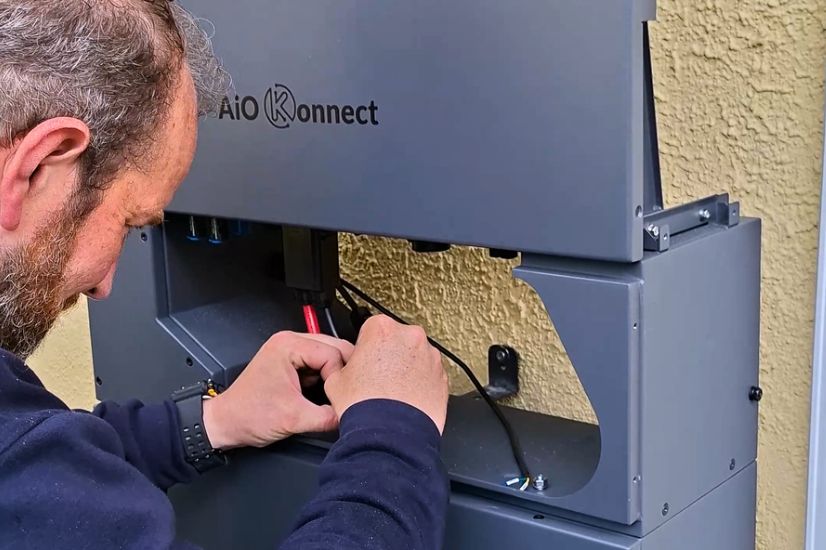
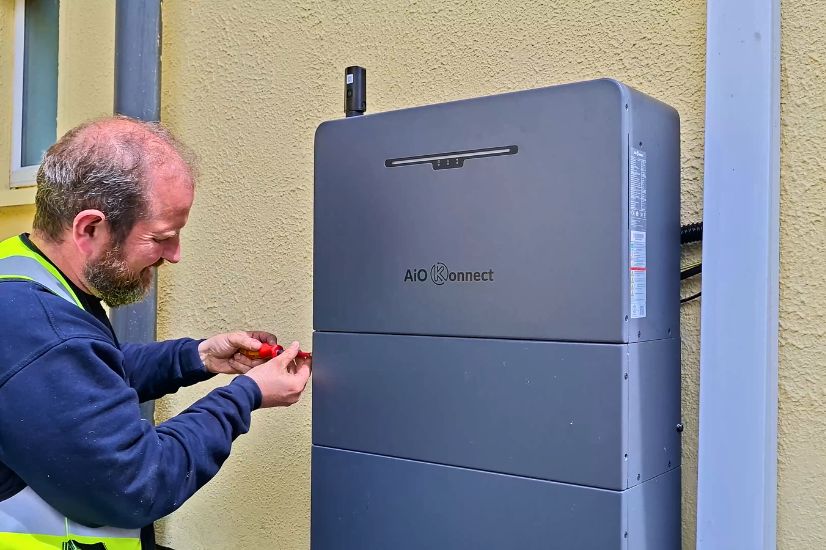
Pairing a battery with solar means you can avail of more incentives – 0% VAT instead of 23%, €2,400 max grant value instead of €600.
Plus, you can charge the battery for free from solar instead of buying electricity from the grid.
Get a free quote for a solar panel and battery system, with market-leading product and workmanship warranties, below.
"*" indicates required fields